NSER 2026 – Check Registration, Eligibility & Status Online
The NSER (National Socio-Economic Registry) is an important database used by the Government of Pakistan to identify low-income families who need financial support. It collects socio-economic information from households across the country to determine eligibility for welfare programs such as the Benazir Income Support Programme. Through the NSER survey, the government can target assistance to deserving citizens. Understanding the NSER system, its registration process, and how to check eligibility can help families benefit from social protection programs.
What is NSER?
The National Socio-Economic Registry (NSER) is a national database created to collect detailed economic and social information about households in Pakistan. The system is managed under policies of the Ministry of Poverty Alleviation and Social Safety, which aims to reduce poverty and improve the living standards of disadvantaged families. By recording information such as income, employment status, and household size, the NSER helps the government identify which families qualify for financial assistance programs.
In simple terms, the NSER works as a poverty identification system. It allows government departments to distribute welfare benefits more effectively and ensures that support reaches those who truly need it.
NSER Survey in Pakistan
The NSER survey is the process used to collect household information for the database. During the survey, officials gather socio-economic data directly from families. This includes information about the number of family members, their education level, employment status, and income sources. The collected information is then stored in the national database, which helps authorities determine eligibility for various government assistance programs.
The survey plays a vital role in ensuring transparency in welfare programs. Without reliable data, it would be difficult for the government to identify families living below the poverty line. Through regular surveys and updates, the NSER ensures that the database remains accurate and useful for policy planning.
Role of NSER in Welfare Programs
One of the main purposes of the NSER database is to support social welfare programs across Pakistan. The most well-known program connected to NSER is the Benazir Income Support Programme, which provides financial assistance to low-income families.
When a household completes the NSER survey, their information is evaluated to determine whether they qualify for financial support. If they meet the eligibility criteria, they may receive cash assistance or other benefits from government programs designed to reduce poverty and improve economic stability.
How to Register in NSER
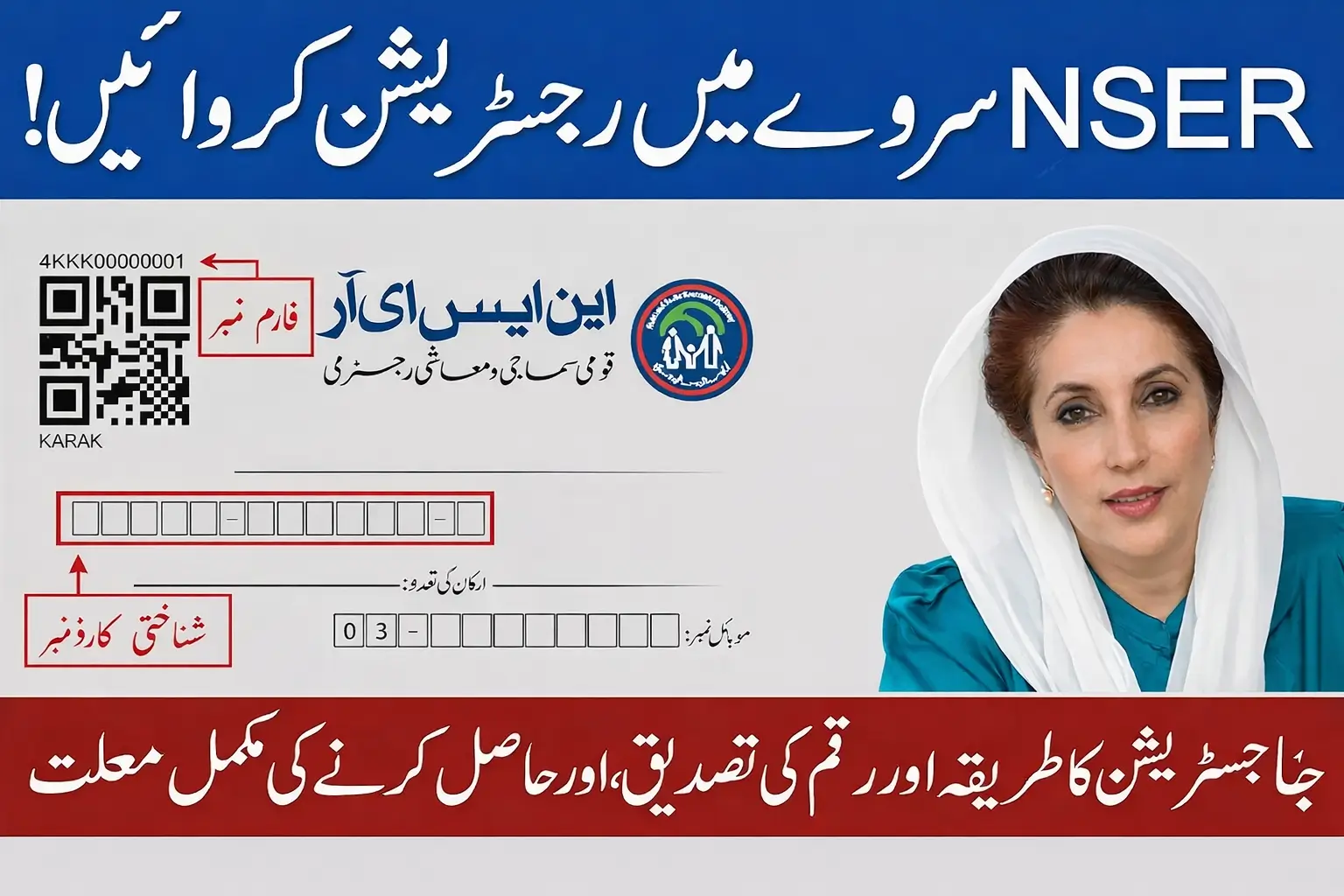
Citizens who want to become part of the NSER database can register through the official survey process. Registration usually takes place at local BISP or survey centers where trained staff collect household information. Applicants are required to provide accurate details about their family, income, and living conditions.
The process begins when a family visits the nearest survey office or is contacted by survey teams. After verifying the applicant’s identity through their CNIC, officials conduct a short interview to collect socio-economic information. Once the data is submitted and verified, the household becomes part of the NSER system and may qualify for government assistance programs.
Checking NSER Status
After completing the survey, many people want to know whether they are eligible for financial support. The government provides simple ways to check the status of NSER registration. One common method is sending the CNIC number via SMS to 8171, which allows citizens to receive information about their eligibility.
Another option is using the online portal associated with the BISP system. By entering their CNIC number, individuals can check whether they are registered in the NSER database and whether they qualify for assistance. These digital methods make the process easier and more accessible for citizens across the country.
Eligibility Criteria for NSER Programs
Eligibility for programs linked to the NSER database is mainly determined by the economic condition of a household. Families with limited income and fewer financial resources are usually prioritized. The system also considers factors such as employment status, housing conditions, and family size when determining eligibility.
Special priority is often given to vulnerable groups including widows, disabled persons, and families living in rural areas. By focusing on these groups, the NSER helps ensure that social welfare programs reach the people who need support the most.
Documents Required for the NSER Survey
To complete the NSER survey successfully, applicants must provide certain documents for verification. These documents help confirm the identity of the household and ensure that the collected information is accurate.
Common documents required during the survey include a valid CNIC, children’s B-Form, and a registered mobile number. In some cases, applicants may also need to provide details about their household income or utility bills. Providing accurate information during the survey is important because incorrect data can affect eligibility for welfare programs.
Benefits of NSER Registration
Registering in the NSER database offers several advantages for low-income households. Families included in the registry may become eligible for financial assistance programs, educational support, and other social protection initiatives.
These benefits are designed to improve living conditions and provide economic stability to families struggling with poverty. By targeting assistance to the right households, the NSER system plays a key role in supporting Pakistan’s poverty reduction strategy.
Latest NSER Updates
The government periodically updates the NSER database to ensure that the information remains accurate and relevant. These updates are known as dynamic surveys, which allow new households to register and existing families to update their information. Citizens who have not updated their survey details for several years may be asked to participate in a new survey process.
Regular updates help the government track changes in economic conditions and ensure that financial assistance reaches the most deserving families. Keeping household information updated in the NSER system is therefore important for continued eligibility in welfare programs.
Importance of NSER for Pakistan
The NSER database has become a critical tool in Pakistan’s social protection system. By collecting reliable socio-economic data, it enables policymakers to design better poverty reduction strategies and distribute resources more effectively.
Through programs connected to NSER, thousands of families receive financial assistance that helps them meet basic needs such as food, education, and healthcare. As a result, the system contributes significantly to improving the quality of life for vulnerable communities across the country.
FAQs
What is NSER in Pakistan?
NSER stands for National Socio-Economic Registry, a government database that collects household socio-economic data. It helps identify low-income families eligible for welfare programs like BISP.
How can I register in the NSER system?
You can register by visiting your nearest BISP office or survey center with your CNIC and household information. Officials will collect data and verify your details for inclusion.
How do I check my NSER status?
You can check your status by sending your CNIC to 8171 via SMS or by visiting the official online portal. The system will confirm your eligibility for government assistance.
Who is eligible for NSER programs?
Eligible families are low-income households with limited resources, including widows, disabled persons, and rural families. Priority is given to those living below the poverty line.
What documents are required for NSER registration?
Applicants need their original CNIC, children’s B-Form, registered mobile number, and sometimes income or utility bills. Providing accurate documents ensures smooth registration and verification.
Conclusion
The National Socio-Economic Registry (NSER) is an essential database that helps the Government of Pakistan identify families living in poverty and connect them with financial assistance programs. By collecting detailed household data through nationwide surveys, the system ensures that social welfare benefits are distributed fairly and efficiently. Understanding how the NSER survey works, how to register, and how to check eligibility can help citizens access important support programs and improve their financial stability.